
The Aggravation of Economic Situation, the Regime's Desperation, the Intensification of People's Struggles and Resources
November 28, 2025
Our country is in difficult conditions. The Islamic Republic, with its destructive economic policies, political incompetence and corruption, has driven the country to the brink of bankruptcy and has led it to unprecedented international isolation. It has brought nothing to the Iranian people except the suppression and deepening of social crises and the expansion of poverty and unemployment. However, what our society is facing today is one of the worst conditions during the Islamic Republic's rule.
1- The Aggravation of Economic Situation
The economic situation in the country has reached the brink of collapse. The engineered official statistics that try to downplay the crisis also all confirm the existence of an economic crisis that is getting worse.
The economic growth rate excluding oil revenues is still negative, the production stagnation that has long plagued the industry has continued through the summer and fall and has been caught in a severe and unprecedented crisis with power outages.
The official inflation rate has reached more than 40 percent. The headline inflation rate for food has increased by 17 percent to 66 percent in 4 months. The price of all medicines has increased by 400 percent and even more, creating a crisis that even regime officials acknowledge.
Food prices have risen by 10 to 300 percent in a year and are increasing by hour. Grains have increased by 300 percent, bread and meat by more than 100 percent, dairy products by 70 percent, rice by 300 percent, fruits and vegetables by between 70 and 100 percent. It is impossible to name a commodity whose price has not increased.
According to official statistics, house rent has increased by 41% compared to last year. According to economic newspapers, the increase in rents for the past 13 years has been unprecedented. The cost of housing in the last few months has caused at least ten cases of gatherings by housing applicants, and these kinds of protests are spreading. At the same time, there are hundreds of thousands of empty apartments that are unoccupied due to soaring prices. The housing sector, which is the driving force of employment, is in recession. The phenomenon of sleeping on the roof, sleeping in cardboard boxes, sleeping in cars and sleeping in tents, which indicates the high cost of housing, has also increased.
The situation of medicine and treatment has become extremely dire and critical. The Social Security Organization practically avoids paying for many medicines, and many patients abandon treatment because they cannot afford to pay for their medicines. According to experts, the elimination of drug subsidies, rampant inflation, devaluation of the rial, heavy government debt to pharmacies and pharmaceutical factories, liberalization of most drug prices, and shortages of drugs in the market are the main factors behind the high cost of drugs, which in some cases has caused human losses.
2- Production Stagnation and Increased Unemployment
Many businesses have suffered due to inflation, the fall in the value of the rial, increased sanctions and a decline in purchasing power, increased prices of raw materials, electricity, gas, and water, severe government budget deficits, the elimination of the development budget, and frequent power and water outages. The increase in inflation has had its impact on the tourism industry, which was a source of income and prosperity, and has made this industry even weaker than before. Only the wealthy have not yet lost the ability to travel and move around.
The situation of agriculture and farmers has worsened due to the drought. Their protests over the right to water are reflection of their dissatisfaction.
The official unemployment rate for 2014 was announced at 7.4 percent, but the real figure is much higher. Men account for 84 percent of the employed population, while women account for only 16 percent.
Frequent power and water cuts have caused long shutdowns in production units and businesses, and in addition to the dismissal of a number of workers, they have also caused damage to machines and raw materials. In many production and even service units, employers have refused to pay wages and insurance premiums on time under the pretext of a slowdown in work and are trying to fire their old and experienced workers and replace them with temporary contract workers. This situation has had a negative impact on the demand struggles.
The increase in the number of working and street children and those who have dropped out of school, the increasing number of prostituted women and girls, addicts and drug dealers, the widespread prevalence of theft, crime, and malnutrition are other consequences of the quasi-neoliberal economic and social policies of the Islamic Republic regime.
The consequences and effects of economic changes and developments have led to an increase in the number of people below the poverty line and absolute poverty, social class change, an increase in the class gap, increased unemployment and stagnation and bankruptcy of some production institutions, delays in the payment of wages for several months, and an increase in the cost of living and inflation. Having multiple jobs to compensate for the shortfall in living expenses has become the rule from the exception.
The widespread prevalence of bribery to compensate for the shortfall in living expenses in this chaotic market is considered legitimate and has become a normal practice.
Although the damage caused by the economic situation has put the greatest pressure on workers, employees, retirees, and the general wage earners and the poor, severely jeopardizing their minimum welfare level and livelihood, but it has also led to a worsening of the situation of businessmen, freelancers, and industrialists, and has led to their anger, dissatisfaction and further protests.
3- The Islamic Republic on the Brink of Abyss
The Islamic Republic is ineffective and desperate in the face of the country's problems, and due to the pressure of protests, it has taken dramatic measures to meet the people's essential needs in some areas, such as allocating food stamps for 5 food items, in order to reduce the pressure on the poorest segment of society, which in practice has little effect. Of course, the regime’s officials also cover the cost of these same food stamps by cutting subsidies for eight million subsidy recipients. By cutting subsidies for basic goods, multiplying the price of preferential currency, and increasing the price of gasoline and energy on the one hand, and by freezing wages, the regime plays a major role in imposing poverty and a livelihood crisis on most social groups. There are undoubtedly other solutions and resources, such as utilizing the economic and financial sectors under the control of the Supreme Leader, which is estimated to control about 40 percent of the country's financial resources, to meet welfare costs and rebuild the country's infrastructure. Naturally, those who have seized this huge wealth of the country and do not pay taxes are not willing to voluntarily return these funds to the people as the original owners of these funds, but by intensifying the struggle, it can be taken back from its usurpers and at least some of the crises can be reduced with its help.
It is clear that with the continuation of the current policies, the crises will intensify and the conditions will become more difficult for the majority of the people day by day. In the meantime, only the people themselves can put pressure on the regime by expanding solidarity and undertaking a targeted struggle, imposing their demands on the regime, and preparing the conditions for the democratic reconstruction of society. However, we should not wait until then and not take advantage of the opportunities and possibilities that arise to reduce the pressure of the crisis.
4- The Ongoing Struggles of the People
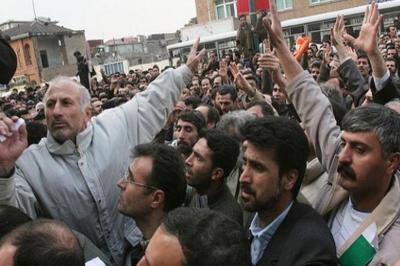
The ongoing struggles of the people to confront the regime’s policies and to improve their lives, which are ongoing throughout the country every day, are one of the clear signs of the internal turmoil in society to escape the current situation. Not a day goes by without hundreds of gatherings, strikes, and protests against the regime, which controls a large part of the country's economy, and the employers it supports throughout the country. Workers, retired teachers, nurses, and medical staff in the country are always dissatisfied with the non-payment of wages and the inadequacy of their income to meet the minimum living standards, and they are fighting to achieve their demands.
However, instead of responding to the demands of workers, retired teachers, and other wage earners in the country, the Islamic Republic uses the tool of repression. But repression has also lost its effectiveness. After the “Women, Life, Freedom” movement, our society has learned to expand civil disobedience against the regime in all areas. This civil resistance has reduced the effectiveness of the regime’s repressive apparatus, and this reduction is increasing every day. The regime’s resort to widespread executions and the dream of reviving the “spirit of the eighties” is another sign of desperation in confronting the widespread disobedience of the people and the weakening of the levers of repression and the incitement of fear among the people. The fear that has now taken root within the regime itself is accelerating its internal collapse.
The people’s persistence and struggle to end a regime that has proven its incompetence and inefficiency in managing society and in ensuring the country’s welfare, freedom, and development is a promise for opening the way to liberation from the current situation.
5-Resources
The ongoing demands and struggles of the people to improve their lives, a collective effort to provide the bare minimum in the current circumstances, are being pursued to hold back the regime and its brokers and economic agents. Strengthening these struggles, supporting these efforts to improve the lives of the people is one of the main components of our policy in confronting the Islamic Republic and its destructive and corrupt rule. These struggles are basically an expression of the vitality of society and an important step to set the regime back in the areas of providing minimum welfare for the people.
Today, in order to escape from the current situation, our country needs a regime that can put an end to the destructive policies of the Islamic Republic in all areas and meet the needs of the country and its people. Since its inception, the Islamic Republic has pursued its own specific goals in all areas. It has spent public funds on nourishing ideological parasitic institutions, from "seminaries" to all sorts of other redundant institutions. In the current country's budget, the main share is still allocated to these institutions and institutions of the regime’s repression, and the share of institutions providing services to the people is much smaller in comparison.
Today, it is clearer than ever that the conditions for getting out of the current miserable situation are:
Ending the destructive and corrupt economic policies of the past and adopting a development-oriented, employment-generating economic policy that is in line with the country's needs;
A fundamental change in the country's foreign policy, normalizing relations with all UN member states, ending hostility with this or that country; de-ideologizing mutual relations and creating a relationship based on national interests and for their protection;
Ending the current political and security repression, releasing political prisoners, freedom to form parties, independent organizations, trade unions and associations, and other non-governmental organizations;
Leaving the choice of the type of government to the people, i.e. the equal citizens of the country (regardless of their ethnicity, political and religious beliefs, and gender) and in order to serve the people, ending the interference of religion in the government affairs, while recognizing freedom of belief and ideology, and belief in religion or lack of belief in it;
Providing access to justice for all those who have been harmed in the Islamic Republic and adhering to justice during the transition from the Islamic Republic to a secular and democratic system;
The Left Party of Iran, while striving for the success of the people's daily struggles to secure a minimum standard of living, considers the united effort and struggle to end the Islamic Republic and establish a secular democratic republic as the only way that can save society from this misery that the Islamic Republic has brought. The Islamic Republic's regime is irreparable and all its corrupt elements are opposed to any opening to the future of the country. We call on all political parties, organizations, and democratic institutions in Iran and abroad to join and cooperate in this direction.
Political-Executive Board of the Left Party of Iran
Friday, November 28, 2025.